
With consumers staying indoors and e-commerce firms extending their reach to a larger number of pin codes, these giants have snatched a larger share from the offline traders this season.
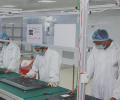
The stock of Dixon Technologies (India), the country's largest listed electronic manufacturing services (EMS) player, was up 6 per cent in 10 trading sessions, boosting the gains over the last three months to 21 per cent. The gains came following reports that Dixon will produce laptops in India in partnership with US and Chinese firms under the production-linked investment (PLI) scheme. It recently signed an agreement to make smartphones for Xiaomi India.

The battle for subscribers in the direct-to-home (DTH) market is hotting up with Reliance Communications (RCom) close to finalising a bulk deal with the country's leading TV manufacturers -- LG Electronics, Samsung India and Sanyo -- which will be offered to customers at a hefty discount bundled with a DTH package.

The government on Thursday imposed import restrictions on laptops, tablets, all-in-one personal computers, ultra small form factor computers, and servers with immediate effect. The Directorate General of Foreign Trade (DGFT) in a notification said exemption from import licensing is provided up to 20 items per consignment for R&D, testing, benchmarking and evaluation, repair and return and product development purposes.

The Apple iPhone comprises 44 per cent of the global smartphone market's revenues and it is the second most-such device to be shipped after Samsung. More than half of smartphones used in the US are iPhones. More than 7 million iPhones are expected to be sold in India in 2022, extending the user base to 20 million, according to market research and analyst firm Techarc. Hence, the news about Apple scaling down its production target for iPhone 14 in India has made news.

From auto, refrigerator, and mobile handset makers to real estate firms, companies are tying up with banks to dole out attractive finance schemes and discounts to make buying more affordable.
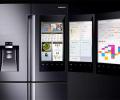
What is driving the digital-first approach of traditional, legacy brands? Apart from the growing adoption of the internet in the country, brands are drawn to the agility of the medium.

Chinese mobile brands are deeply entrenched in the Indian market. A move to bar them may send a bold diplomatic message. But its cost for the local industry is anybody's guess. In the event that Chinese brands face curbs, two handset makers - Samsung and Apple - squarely stand to gain.
When it comes to branding exercises, almost everything comes with an expiry date. And celebrity endorsement is no different. This is probably a reason why we see celebrity endorsers being dropped or changed by brands on a regular basis. But does a time come, when brands feel that they can do away with the idea of having any brand ambassador? It certainly seems so in the case of a few brands.

After 2014, our growth has been average of around 5%. If this continues, we will remain here like Egypt, Brazil, South Africa and Bangladesh, points out Aakar Patel.

The finance ministry is looking at a reworked proposal from mobile device makers on how to fight the rampant and growing smuggling of very high end phones. The proposal suggests reducing the basic customs duty (BCD) on phones which have a CIF (cost, insurance and freight or price at landing in the port) value of over Rs 35,000-Rs 40,000. The retail value of these phones is upwards of Rs 70,000.

The company captured just 2.4% of the mid-range smartphone market in India, a far cry from the 24.2% share Oppo's F3 commanded.

E-commerce major Amazon will host Prime Day - its annual sale event - in India on July 15-16. The company will launch over 45,000 products from over 400 Indian and global brands. The announcement of the Prime Day event in India comes at a time when 900 workers at Amazon UK plan to strike for three days (July 11-13).

ICICI Bank, the country's largest private sector lender, has introduced an equated monthly instalment (EMI) option for its customers on debit card purchases.

'Slim Ultra', which the company claims to be the world's slimmest CDMA phone, is priced at Rs 2,999.

'Whoever owns the best chip industry will be the Saudi Arabia of the era of data,' predicts Rajeev Srinivasan.

Check out how Google's flagship phablet, the Nexus 6, will take on Apple and Samsung

'You have to be a total anti-national bozo to shut down the Nokia plant in Sriperumbudur, which was the first large manufacturing plant for mobile phones in India.' 'Why was the unit shut down? Because of somebody's ego.'
Technology companies dominate India's most attractive brands.

The industry is expecting double-digit growth on a year-on-year basis, helped by a possible price correction after softening of raw material inputs and factors such as positive sentiments, pent up demand and improving economic conditions. Besides, a shift in consumer behaviour from price consciousness towards technologically advanced premium products with quality, value proposition and safety aspects leading to a rise in demand for home automation products is making the industry upbeat. With the government's production linked incentive (PLI) scheme for white goods, which has witnessed a committed investment of Rs 4,614 crore, in place, many manufacturers are gearing up to make the most out of the opportunity as well as take steps towards reducing their dependency on imports and make products more affordable.
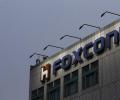
They are both electronic manufacturing services (EMS) companies, also known as contract manufacturers. One is Taiwan's Foxconn group, the undisputed global number one in this business with revenues of $223 billion. The other is Dixon Technologies, the biggest domestic player with revenues of over Rs 10,500 crore.

Smartphone shipment in India declined by 10 per cent to hit a three-year low of 43 million shipment in the July-September 2022 period, market research firm International Data Corporation said on Monday. The 5G smartphone share reached 36 per cent of total smartphones during the reported quarter with 16 million units at a slightly higher average selling price of $393, about Rs 32,000, apiece compared to $377, about Rs 30,600, in the previous quarter. "India smartphone market declined 10 per cent year-over-year (YoY) shipping 43 million units in July-September 2022.

The top five most trusted brands are Samsung Mobiles, Sony, LG, Nokia and Tata.

'Had they agreed to our demands that we raised two years ago, we would have never started our agitation again.'

Their favourite alternatives: Malaysia, Vietnam and the Philippines. Note, India is missing from that list. And this is despite an attractive financial incentive scheme for OSAT players. The reason, said a senior executive of a US chip company who had a meeting in Taiwan just a few weeks ago, is that "they want more predictability in government policy because they plan to put in big money."

As the rupee continues its freefall against the dollar, cars, TVs, washing machines and other home appliances are set to cost more with companies set to hike prices to offset impact on their margins.

Despite its budget constraints, the Moto G5 Plus tries to match the mighty Samsung galaxy S7, but fails, says Himanshu Juneja

Google, in its latest appeal to the Supreme Court, has said the Competition Commission of India (CCI) is protecting Amazon's interests after having complained that India's anti-competition body (CCI) had copied part of a European Commission ruling against it for allegedly abusing the market dominance of Android. The latest twist to the Google-CCI case comes as Google filed an appeal in the Supreme Court on June 26, against the National Company Law Appellate Tribunal's (NCLAT's) March 29 order. The tech giant's contention is that the NCLAT failed to apply the "effect analysis" part in the CCI order.

Chinese handset maker Xiaomi has begun covering its retail store branding with white 'Made in India' logo amid fears of vandalism at outlets against the backdrop of Sino-India border tension, the All India Mobile Retailers Association said. The association had written to Chinese mobile brands to highlight the threat of vandalism at offline stores by people amid calls for boycotting Chinese products in certain sections.

'Last year we sold 18 million phones in India, this year we should do 23-24 million, and next year our target is to hit 40 million.'

The usually busy Greater Noida expressway is empty except small groups of commuters that gather at its sidelines, seeking lift from every passing vehicle.

Apple and Samsung are international players and should work as a team with domestic companies to transform India into a global powerhouse: IT Minister Ravi Shankar Prasad.

Says Make in India could only succeed with Make in UP, given large sized population and market the state offers

A number of smartphone players such as Xiaomi, Samsung, LG and Micromax also have smart TVs in their product portfolio.

Starting with a family, which had a dealership of Bajaj Auto's scooters, to becoming the owner of a household name in consumer appliances who could afford to have Bollywood superstar Shah Rukh Khan as the brand ambassador, Venugopal Dhoot's is a story of an aggressive small town businessman's pursuit to be on the top. Now arrested in connection with the ICICI Bank loan fraud case, Venugopal Dhoot during his heydays was not the one to simply sit on small achievements like Videocon becoming the largest television set manufacturer in India.

Apple Inc's leading contract manufacturer, Taiwanese giant Wistron, has exceeded its investment obligation in India in just eight months, although the government's production-linked investment (PLI) scheme allowed it to complete the investment in four years. Between August 2020 and end March 2021, Wistron made an investment of Rs 1255 crore - 25 per cent more than the total investment it had committed to the government. Under the PLI scheme for mobile devices, the government had stipulated that each of the five participating global companies needed to invest Rs 250 crore every year for the first four years, totalling Rs 1,000 crore.

The government on Thursday tweaked curbs on imports of laptops and computers as it allowed importers to bring in shipments of IT hardware from overseas on a mere 'authorisation' upon detailing quantity and value. The new 'import management system' is aimed at monitoring shipments of laptops, tablets and computers into the country without hurting market supply or creating a cumbersome licensing regime. The announcement is likely to provide relief to companies in the IT hardware segment in India as they had flagged concerns over the imposition of a strict licensing regime for importers.

Will open radio access network technology (O-RAN) disrupt the way 5G networks roll out in the country? After all, it promises to offer a substantially lower capital cost, enables the choice of an array of vendors, and provides more network flexibility - all very important for telcos who expect to invest over Rs 60,000 crore to roll out a pan-India 5G network and that's without spectrum costs. But more importantly, it counters the stranglehold of global telecom gear makers such as Ericsson, Nokia, and Samsung over telcos to whom they sell propriety technology and bundled hardware and software.

Photo-messaging app Snapchat on Wednesday said its monthly user base has reached 100 million in the country, and the company will continue to anchor its efforts towards growing and providing more resources to its community of Indian creators. Snap Inc, the parent company of Snapchat, virtually hosted the second edition of 'Snap in India'. At the event, Snap co-founder and CEO Evan Spiegel announced the milestone of reaching 100 million Snapchatters monthly in India.
